
Dr Louie Slocombe
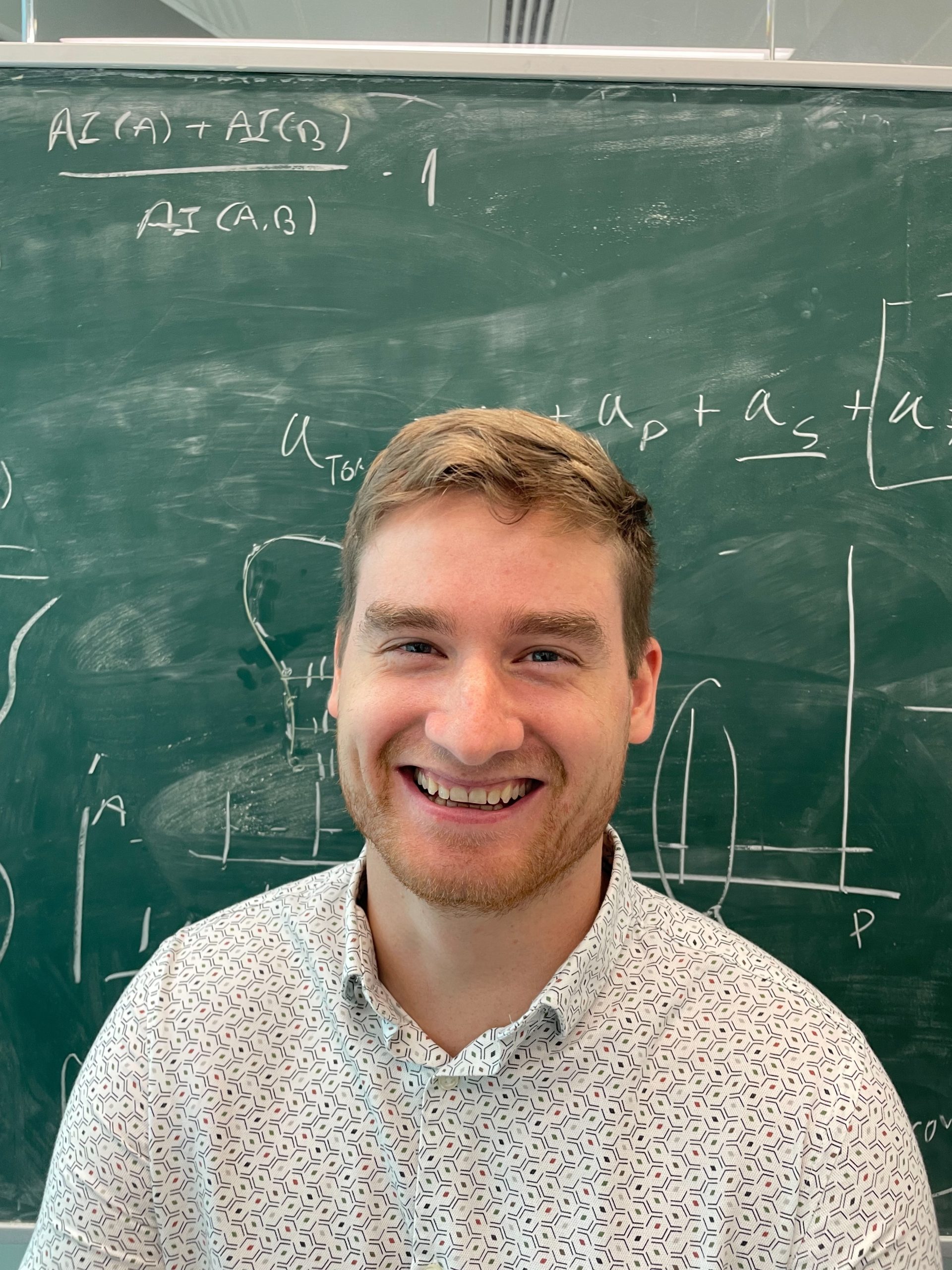
Louie completed his MPhys and PhD in Physics at the University of Surrey. He subsequently worked as a Research Fellow at Surrey before joining Arizona State University’s Beyond Center as a Research Lab Manager and Postdoctoral Researcher. His research has applied computational chemistry, physics, and machine learning to problems spanning biological systems, chemical space, and molecular modelling.
Louie joined the Scanlon Materials Theory Group in June 2026. His research focuses on developing computational and AI/ML methods to design more sustainable polymers and predict their environmental biodegradability. In particular, he is interested in polymers used in liquid formulations, which can enter the environment directly and how they interact with biological systems. His work aims to develop faster, more affordable and environmentally relevant alternatives that complement conventional 28-day OECD biodegradation tests.
Outside the lab, Louie enjoys diving, cycling, climbing and playing board games.
Dr Romain Claes

Romain grew up in Belgium and studied chemistry at UCLouvain before embarking on his PhD journey in materials sciences. Under the guidance of Prof. G. Hautier and Prof. G.-M. Rignanese, his doctoral research centered on exploring the transport properties of semiconductors for various technological applications. Romain joined SMTG in February 2024 to work on transparent conducting oxides (TCOs) as part of the Praetorian project. In his spare time, he enjoys football (🎵 je peux pas vous cacher que je suis supporter des mauves et blancs 🎶), watching cycling and fishing videos (number of fish caught since 2019: 0) but also a good (belgian) beer after work.
Dr Alexis Manche
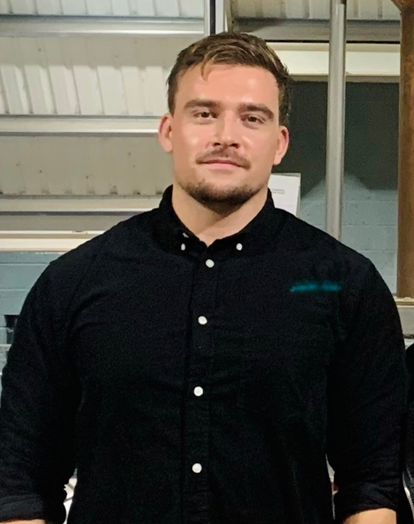
Alexis grew up in a small town in central France before relocating to Bordeaux, to pursue higher education. During his B.Sc. degree, he gained foundational knowledge in physics and chemistry, which led him to pursue a Master’s degree in Physics-Chemistry and Chemical-Physics. During his M.Sc., he worked on two significant research projects. In 2019, at the ICMCB in Bordeaux, he focused on the synthesis, characterisation, and electrochemical properties of new positive electrode materials of NASICON type for Li-ion batteries. In 2020, at the Materials Research Laboratory at the University of California, Santa Barbara, he conducted first-principles calculations to predict the NMR properties of paramagnetic battery materials.
In September 2020, Alexis began his PhD under the supervision of Dr. Rob Armstrong as part of the NEXGENNA project, funded by The Faraday Institution. His research focuses on addressing the challenges of polyanion redox in oxalates for Li-ion and Na-ion battery applications using first-principles calculations and experimental techniques.
Alexis joined the SMTG in October 2024 as a NEXGENNA Research Fellow, supported by funding from the Faraday Institution. His research focuses on exploring Na-ion battery cathode materials, with a particular interest in investigating anionic redox behaviour and how defect chemistry influences electrochemical performance.
Dr Guodong Bian
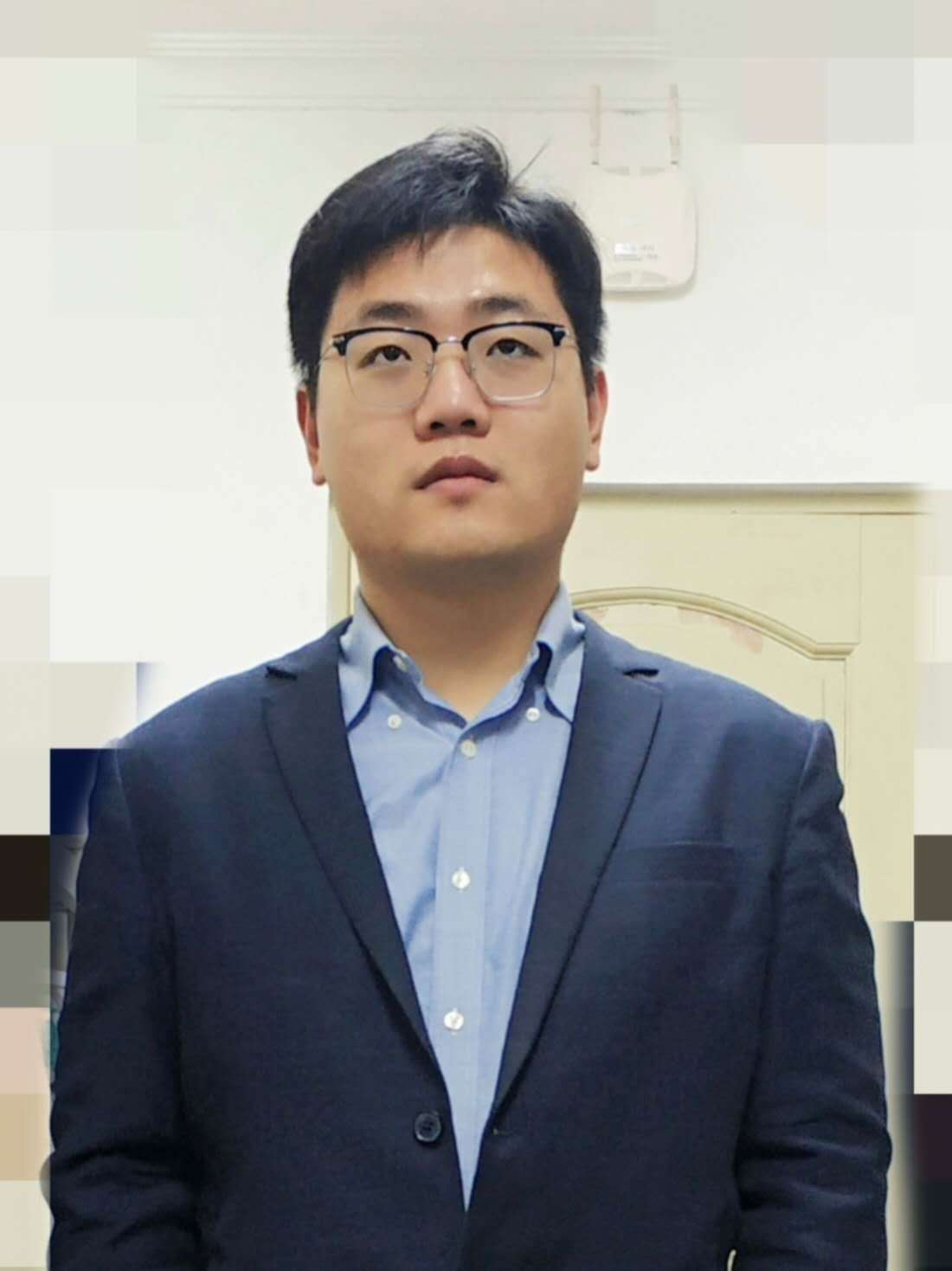 Guodong is from Shandong, China. He earned his bachelor’s degree in physics from Shandong University before pursuing his PhD at Beihang University, where his thesis focused on quantum sensing using NV centres in diamond. During this period, he developed a strong interest in identifying superior defect materials, which led to the integration of first-principles calculations of magneto-optical properties into his doctoral research. In April 2023, Guodong joined the Wigner Research Centre for Physics in Budapest as a postdoctoral researcher, focusing on the quantum properties and practical applications of novel defect centres in SiC. By June 2025, he joined SMTG, where he is dedicated to identifying the next generation of inorganic phosphors for solid-state lighting and expanding the database of quantum materials with potential applications in quantum information science. In his spare time, Guodong enjoys cycling and swimming.
Dr Chaiyawat Kaewmeechai
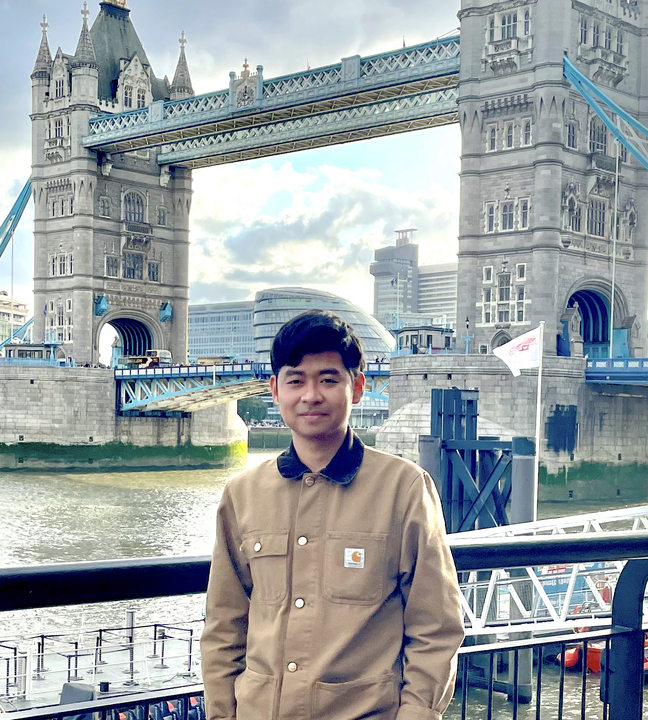
Chaiyawat is from Thailand. He obtained a BSc and MSc in Physics from Chiang Mai University. His master’s research focused on band offset calculations between wurtzite nitride and oxide semiconductors using DFT. He pursued a PhD in the Condensed Matter and Materials Physics Group at UCL under the supervision of Prof. Alexander Shluger, working on computational modelling of charge trapping and defect properties in amorphous and crystalline gallium oxide. Chaiyawat joined the Scanlon Materials Theory Group at the University of Birmingham as a postdoctoral researcher to work on transparent conducting oxides. In his free time, he enjoys visiting pubs, exploring new music, cooking, and watching football.
Dr Weihang Xie
Weihang is from Beijing, China. During his Ph.D., he studied the effect of surface and grain boundary in solid-state electrolytes, supervised by Prof. Pieremanuele Canepa. Weihang joined SMTG in Jan 2026 to extend his study on extended defects to transparent conducting oxides (TCOs), as part of the Praetorian project. He enjoyed coding, building PCs, and tweaking the hardware. Aside from this, his true dream is to be a bus driver. Weihang is the Sustainability lead for the group, and is leading on our Green DiSC accreditation.
Xun Zhou 2021-2026

Xun is from Changsha, China. He completed his MRes Nanomaterials program at Imperial College London Chemistry department. There, he finished his master’s research program titled “Enhancing the single-molecule sensitivity of nanopores sensing by tailoring the structures and sizes”. Then he worked at Amperex Technology Limited and designed the next generation of 3C product batteries with low impedance. He is now a PhD student in Prof David Scanlon group. In his spare time, he enjoys cooking, although this always keeps the smoke alarm ringing. He also likes being a member of the gym but does not like going to the gym.
Xiaoyu Jia 2021-2026

Xiaoyu grew up in China. She spent 3 years at Nanjing Tech University, China, and 1 year at the University of Sheffield to complete her BSc in Chemistry from 2016 to 2020. After that, she moved to the University of Oxford to study her 1-year MSc in Theoretical and Computational Chemistry, where she took a short project to plot a structural map of a range of inorganic materials. Her PhD project will focus on transparent thermoelectrics and aim to discover a high-performance one using computational techniques. In her own time, she enjoys traveling, singing, and trying out new recipes.
Shipeng Bi 2022-2026

Shipeng is from Inner Mongolia, China. He completed his master’s degree in engineering at Dalian University of Technology. During his three years of master’s career, Shipeng studied the thermophysical properties of some materials through computational techniques. Shipeng’s PhD project will carry out research related to thermoelectric materials under the supervision of Prof. David Scanlon. In his spare time, he likes to have dinner with friends, go to the cinema to see movies and go to the gym.
Ke Li 2022-2026

Ke is from Chengdu, China. She graduated with a first class in BSc Chemistry at UCL in 2021. Before she joined the SMTG, she completed MPhil in Energy Technologies at the University of Cambridge. During Ke’s master project, she investigated the effect of ball-milled LiMn2O4 on light-rechargeable photo-batteries under the supervision of Prof Michael De Volder. Ke’s PhD project will be focusing on transparent conducting oxides. In her spare time, she loves playing tennis, digital painting, and dancing. Besides, she is totally a dog person.
Savya Aggarwal 2022-2026

Savya is originally from India, but moved to the UK in 2005. He has recently completed his MSci in Chemistry from Imperial College London, having focused on exploring the electronic properties of low-dimensional materials using DFT, to identify the semiconductors of the future. His PhD project aims to build on this by combining DFT with machine learning and other computational techniques to explore dopability in semiconductor structures, under the supervision of Prof. David Scanlon (UCL, London) and Dr Kedar Hippalgaonkar (IMRE A*STAR, Singapore). Alongside research, Savya loves sports, especially taekwondo and basketball, and also enjoys reading books or listening to music.
Phillipa Cox 2023-2027

Pip is originally from Brighton. She began her studies with a foundation year at the University of Brighton, then earned a Chemistry degree at the University of Sussex, and later completed a master’s in Theoretical and Computational Chemistry at the University of Oxford. In her current role within the Scanlon group, Pip’s research is centered on studying defects in photovoltaic materials. Beyond her academic pursuits, Pip leads an active life as an avid rock climber and outdoors enthusiast, as well as being a little too obsessed with her dog Smiley.
George Smith 2023-2027

George is originally from the Midlands and recently completed their MSci within the SMTG, investigating a novel copper-based material for photovoltaic applications at UCL. He has now chosen to complete a PhD within the same group but this time returning back to the Midlands and studying at the University of Birmingham. The research will now be focussed on novel Ir and Rh based catalysts for use in electrolysis. In his free time, George enjoys cooking, art, photography and films
Oskar Soulas 2023-2027
Oskar grew up in North London and first joined SMTG in 2022 as part of his MSci project at UCL on solid-state electrolytes for Li-ion batteries. He is now undertaking a PhD in Birmingham working on workflows for the rapid computational screening of solid electrolytes.
In his free time, Oskar can be found swimming competitively or engaging in various crafts projects.
Maryia Shymanovich 2023-2027
Maryia is originally from Minsk, Belarus, but moved to Spain with her family at the age of 16. She came to London to study Natural Sciences at UCL, graduating with MSci in Physics and Inorganic and Material Chemistry in 2020. In her MSci synthetic chemistry project, she studied the effect of transition-metal composition on the structural and electrochemical properties of Ni-rich NMC cathode materials for Li-ion batteries. After completing the course at UCL, Maryia expressed an interest to further explore novel energy materials, but using quantum mechanics and advanced computational techniques. So, Maryia continued her studies at St John’s College, University of Oxford, where she completed MSci in Theoretical and Computational Chemistry program. Maryia joined Prof Scanlon group as a PhD student in 2023 and her project involves computational modelling of defects in emerging materials for photovoltaics and solid state lightning. In her spare time, Maryia likes walking, playing tennis, reading, and watching figure skating competitions.
Abby Parsons 2024-2028
 Abby graduated with an MSci in Chemistry from the University of Birmingham in 2024. She then decided to stay in Birmingham to join the SMTG to complete her PhD within the field of battery materials. In her spare time Abby enjoys crocheting, sewing and painting.
Ben Raine 2024-2028
Ben was home-educated until starting his A-levels, allowing the rare opportunity to skip forward and start 6th form (and university) a year early. After completing a final year project on earth-abundant photovoltaics as part of his chemistry/computer science degree at the University of Birmingham, Ben stayed on to carry out a PhD studying thermal battery materials in collaboration with AWE. Outside of working hours, Ben spends most his time playing badminton or video games online with friends.
Jacob Baggott 2024-2028
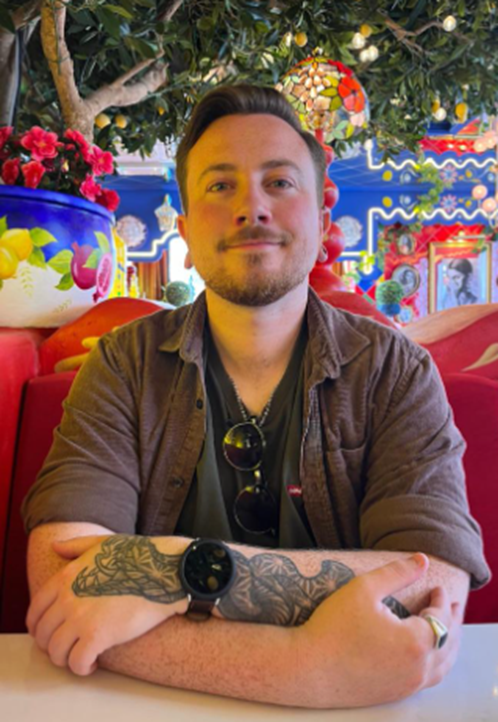
Peter Graham 2024-2028
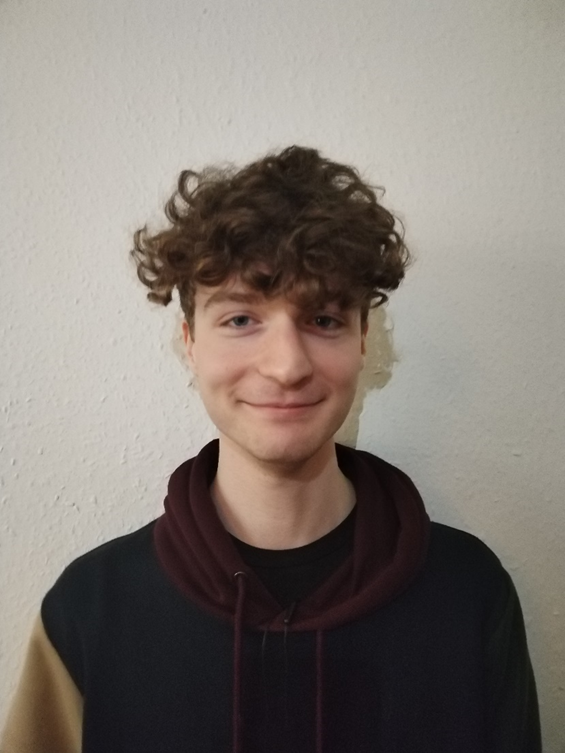
Peter is from Northwest London. He graduated from the University of Birmingham in 2024 with an Msc in Chemistry. His masters project was focused on using DFT to investigate the structural origins of mechanical reactivity in solid state explosives. His PhD is on the investigation of Li-N-H phase space for Li-ion battery electrolytes. In his free time, Peter enjoys playing video/board games, photography and watching films especially bad ones.
Peter Russell 2024-2028
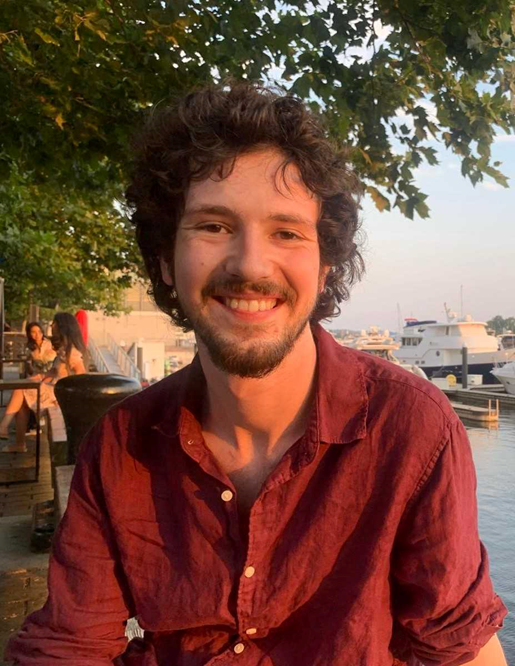
Anu Patabandi Mudiyanselage 2025-2028
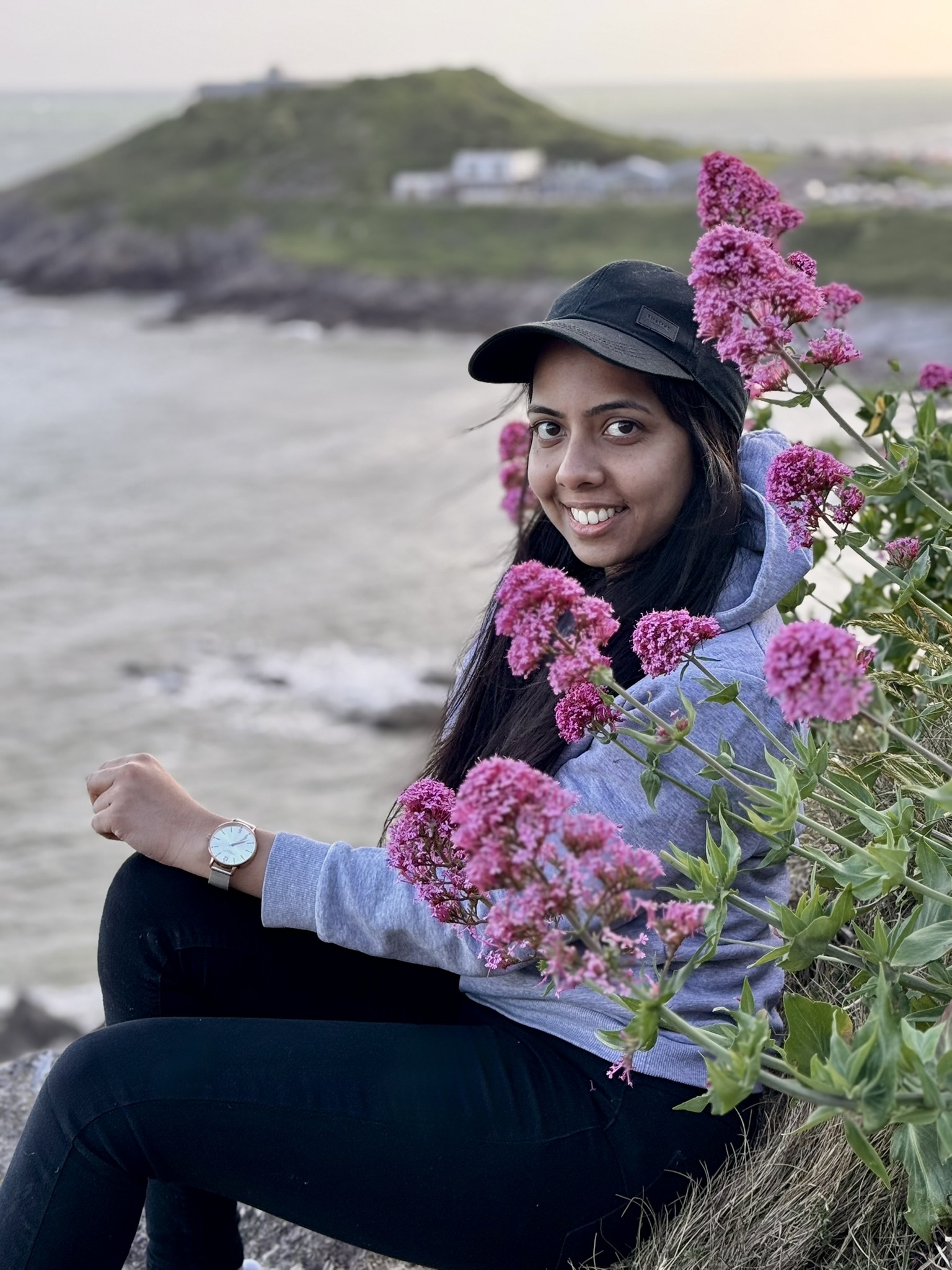
Ling Tan 2025-2028
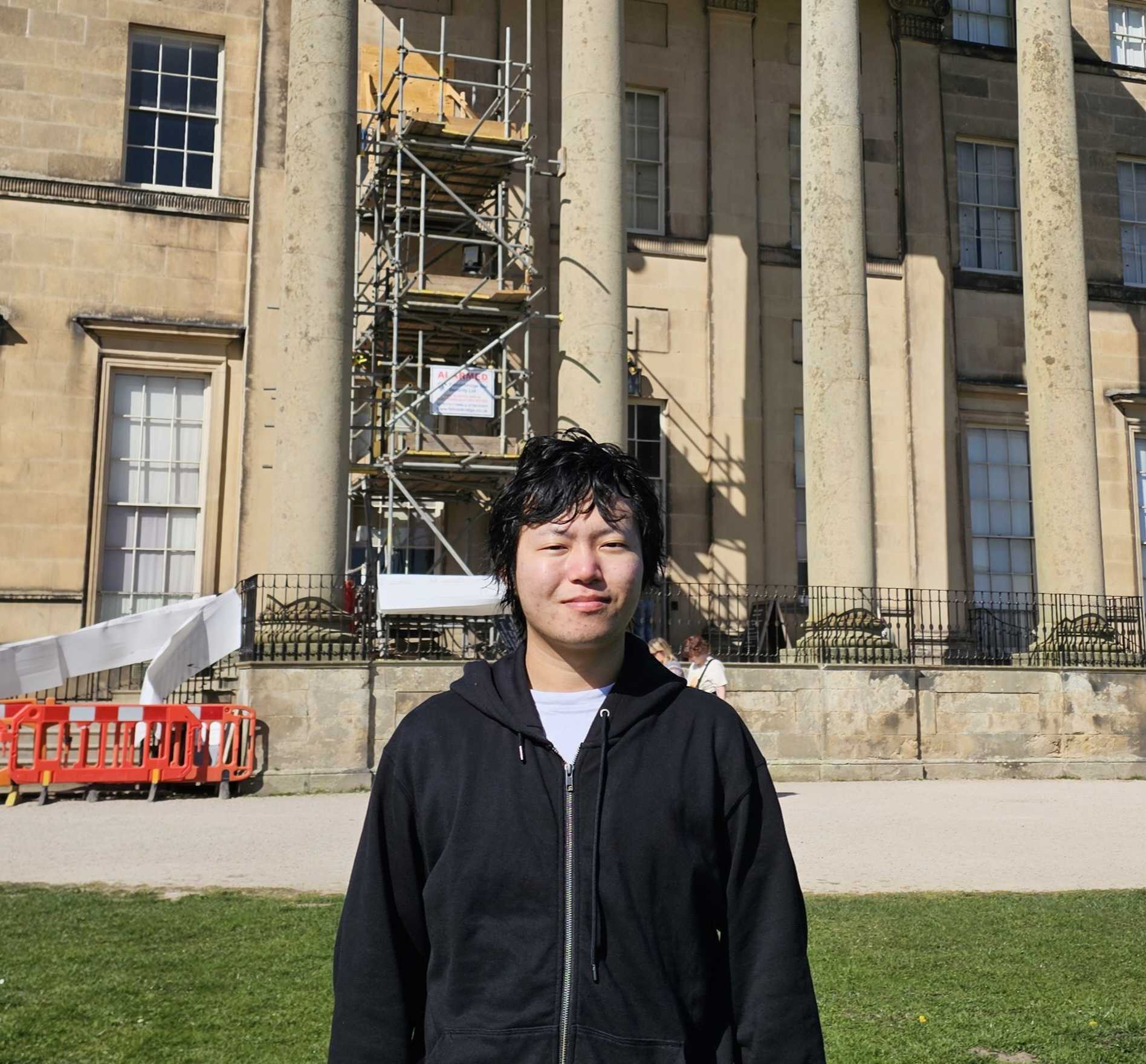
Urvi Joshi 2025-2029

Urvi is originally from London and completed her MSci at the University of Birmingham. Her undergraduate degree included a year in industry, where she studied the surface chemistry of aromatic-based polymeric coatings and novel passivation methods for electrolytic tinplate. Her interest in materials chemistry led her to a master’s project in the SMTG group, where she used DFT to investigate chalcogenide compounds as non-toxic solar absorbers. She is now pursuing a PhD in the group, focusing on defect evaluation in potassium-ion battery materials, integrating machine learning into her research. In her spare time, Urvi enjoys doing archery and spending time with friends and family.<\p>
Jack Beattie 2025-2029
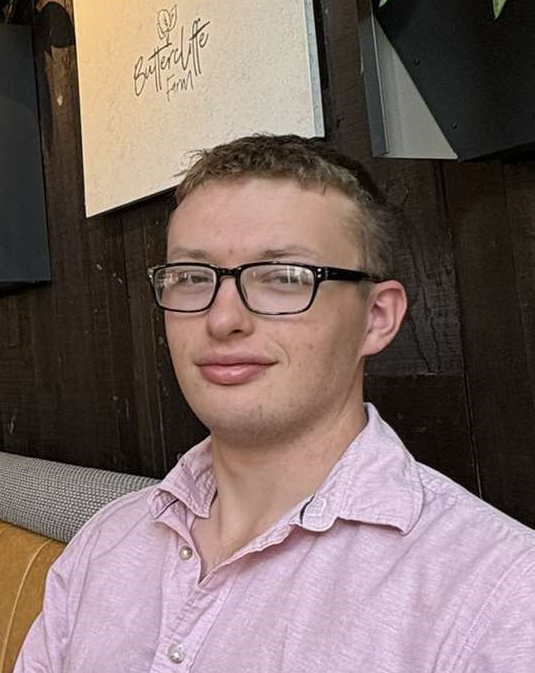
Jack is from Omagh in Northern Ireland. He completed an integrated master’s in Physics at Queen’s University Belfast and completed a final year project using DFT to simulate warm dense matter. He is researching wide band gap oxides as potential transparent conductors, aiming to use machine learning to study their defects. Outside of work he enjoys rugby, golf, going to the gym and playing the bagpipes.<\p>
Milo Carroll 2025-2029

Milo was born in London and grew up in the Cotswolds. He received his BSc at UoB in 2025 and moved straight to a PhD, where his research will focus on machine-learning for defects with an emphasis on mixed-anion systems. In his spare time he likes reading, playing guitar, and watching the Simpsons. He is both super outdoorsy and loves hiking, and a huge music nerd who goes to a lot of concerts.<\p>
Group Alumni
Dr Alex Squires PDRF 2021-2023, Group Leader 2023-2026

Alex studied Chemistry as an undergraduate at UCL; his final year project involved computational screening of bismuth oxyhalides as potential photocatalysts. After graduating with a first class MSci degree, he moved to the University of Bath as a PhD student researching the defect chemistry of battery materials where he developed an unhealthy obsession with disordered materials. Alex joined SMTG in October 2021 to work on novel Li-ion cathode materials as part of the FutureCat project funded by the Faraday Institution. He transitioned to the Group Leader role in SMTG when we moved to Birmingham in September 2023. Alex enjoys long walks (beach optional), overeating and spending too long formatting figures. In August 2026 Alex moved to become a member of technical staff at CUSP.ai.
Dr Adair Nicolson, PhD student 2021-2026

Adair is from North London and graduated from Durham University with an MSci in Natural Sciences (Physics and Chemistry). His master’s project investigated constraints on a fifth fundamental force using atomic spectroscopy, specifically using the spectra of hydrogen, deuterium, and helium. Adair is now undertaking a PhD in chemistry using computational techniques to predict and characterize new photovoltaic materials. In his spare time he enjoys reading, playing sports, cooking and discovering new boardgames. Adair has now joined the Civil Service.
Adair’s profile on Google Scholar Citations
Dr Madhulika Mazumder, PDRF 2023-2025
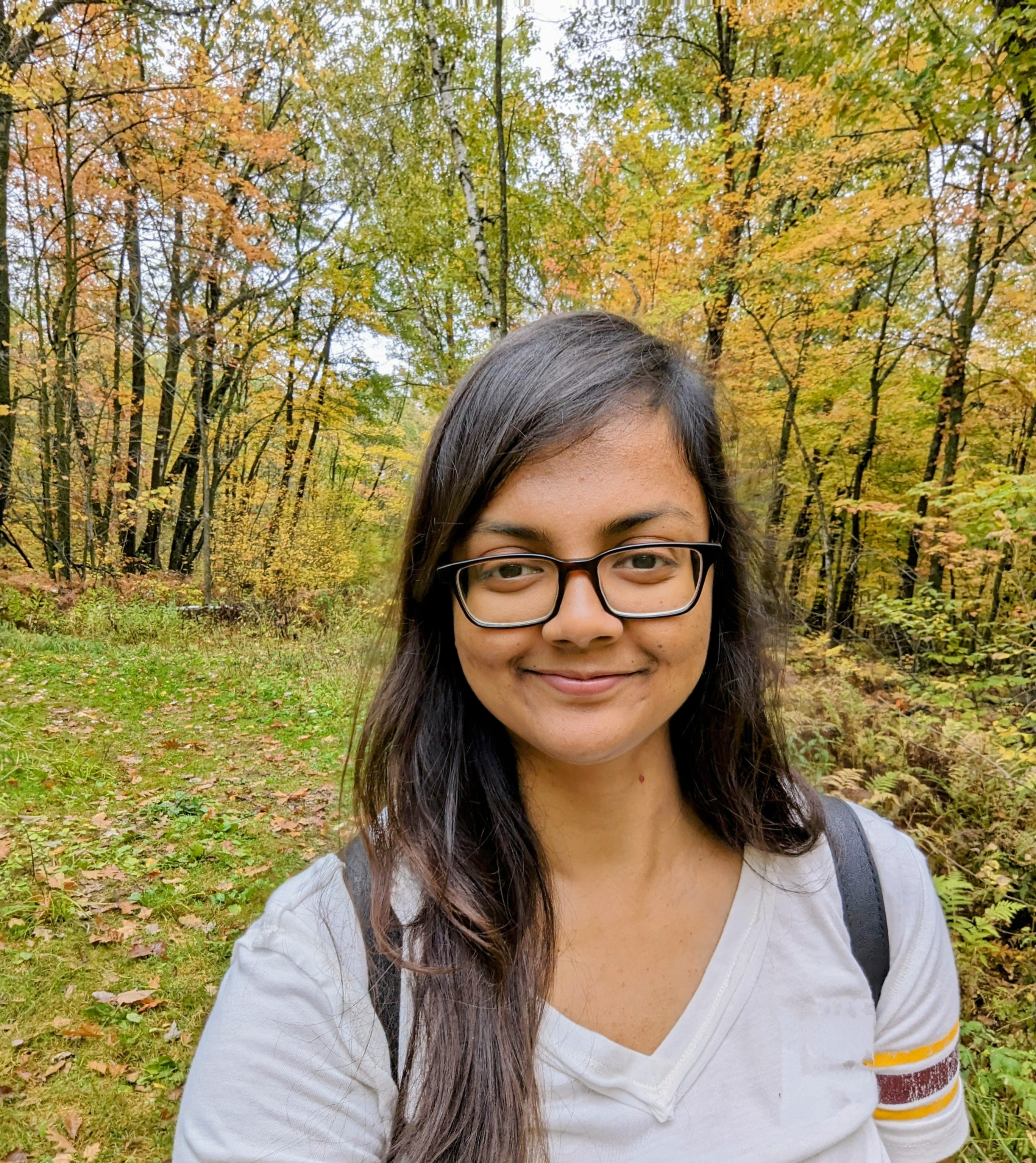
Madhulika is from West Bengal, India and she obtained her Bachelor’s degree with first class honours in Chemistry from the University of Calcutta. Following an MS in Chemical Sciences, she pursued her PhD in Computational Materials Science at JNCASR, India, where she focused on understanding redox mechanisms in sodium ion battery cathodes.
After a stint at the University of Minnesota as a Postdoctoral Associate, Madhulika joined the Scanlon Materials Theory Group in April 2024, as a FutureCat Research Fellow, funded by the Faraday Institution. She strives to delve deeper into Li ion battery cathodes and explore the fascinating influence of defect chemistry on their electrochemical performance.
When she is not poking around atoms in crystals, Madhulika enjoys exploring the outdoors, composing music, trying out recipes and caring for her four-legged friends.
Dr Sandeep Das, PDRF 2023-2025

Sandeep comes from Assam, a state in the northeastern part of India where he completed his 5 years integrated Masters in Chemistry from Tezpur University. After qualifying GATE and UGC-CSIR NET (exams for PhD fellowship and lectureship) he started his doctoral training at Indian Institute of Technology Indore as a computational chemist. His PhD involved using DFT, molecular dynamics and machine learning to understand solid electrolyte interphase formation and cathode designing in dual-ion batteries. After completing his PhD in 2023, Sandeep joined SMTG in April 2024 where he plans to delve into solid state structures for application in Li ion batteries. He has been appointed as a postdoctoral researcher to work on the FutureCat project funded by the Faraday Institution. Outside work hours, Sandeep likes to read novels and watch cricket/football.
Dr Sabrine Hachmioune, PhD 2021-2025

Sabrine is from West London and graduated from the University of Bath in 2021 with an MChem in Chemistry with Industrial Training. Her master’s project investigated disorder in Li-rich structures using computational techniques and statistical mechanics. Sabrine’s PhD project aimed to predict the performance of novel semiconductors for thermoelectric energy generation under the supervision of Prof. David Scanlon (UCL, London), Dr Michael Sullivan (IHPC A*STAR, Singapore), and Kedar Hippalgaonkar (IMRE A*STAR, Singapore and NTU Singapore), and she passed her PhD viva in September 2025. Sabrine has now taken up a research position doing Computational Materials Chemistry with Seagate in Singapore.
Dr Bastien Grosso, PDRF 2022-2023, Marie Sklodowska-Curie Fellow 2023-2025

Bastien studied Physics (BSc and MSc) at EPFL (Switzerland). He spent his last semester as an exchange student at Loughborough University, writing his Master thesis on “Atomic models for Graphene-Kirigami” under the supervision of Prof Eugene Mele (University of Pennsylvania). He then moved to ETH Zurich in October 2016 to start a PhD under the supervision of Prof Nicola Spaldin. Bastien defended his PhD on the discovery of “New Structures and Functionalities of Multiferroic Bismuth Ferrite” in July 2021 and joined the Scanlon Materials Theory Group in January 2022 to work on mixed anion materials. In 2023 Bastien moved to the University of Birmingham to take up a Marie Sklodowska-Curie Fellowship focussed on nitride ferroelectrics. In his free time Bastien enjoys cooking and playing/watching football. In January 2025, Bastien moved to Barcelona to become a Senior BAW R&D Modeling Engineer at Qorvo Inc.
Dr Chris Savory, PhD 2014-2018, PDRA 2018-2021, PDRF 2023-2025

Chris is from West Sussex, and spent his time as an undergraduate at the University of Oxford, graduating with an first class MChem degree. He spent his final year there attempting to find geometrical frustration in a variety of metal pseudohalide salts. Chris spent 42 months at UCL transitioning to becoming a computational chemist, focused on the prediction of novel materials for photovoltaics. Along the way, Chris won the Catlow Prize for best final year Computational Chemistry PhD in UCL and he defended his thesis in August 2018. Chris then took up a position as a “Faraday Fellow”, as his first post doctoral project was part of the Faraday Institution Multiscale Modelling project, focused on a complete computational understanding of degradation in cathodes. In January 2021 Chris transitioned to independence and started a prestigious Ramsay Memorial Fellowship in the Department of Chemistry at UCL. Away from the lab, Chris is a bit of a quiz enthusiast, and also likes to play squash, video games and to try to get through his collection of unread books. Chris joined the Department of Chemistry at the University of Swanswea as a Lecturer in January 2025.
Dr Kieran Spooner, PhD 2018-2023, PDRF 2023-2024

Kieran is from Auckland, New Zealand but has lived most his life in London. He is studied energy materials for his PhD from 2018 to 2023 in the group at UCL. He has also studied transparent thermoelectrics for his MSci in Natural Sciences and screened layered tin perovskites for photovoltaic applications as a summer student. In his spare time he plays video games, reads, runs and walks. He was PDRF funded by an Innovate UK grant in collaboration with Phasecraft and Oxford PV. He is now a PDRF at Jilin University in China.
Dr Dan Han, PDRA 2023-2024
Dan is from China, and she studied Condensed Matter Physics as a PhD student in East China Normal University. She visited Oak Ridge National Laboratory in 2017-2018 as a PhD candidate, and studied the point defect properties of transition metal dichalcogenides. After her graduation, she moved to the University of Munich (Ludwig-Maximilians-Universität) as a Postdoc within the e-conversion project funded by Germany’s Excellence Strategy in August 2019. Her investigation involved predicting novel semiconductors as photovoltaic absorbers and thermoelectrics. Dan joined the group in August 2023 to work on Na-ion cathode materials as part of the NEXGENNA project funded by the Faraday Institution. In her spare time, Dan enjoys playing badminton, photography and travelling. SHe has now joined the University of Jilin as an Professor.
Dr Alp Eren Samli, PhD 2021-2024

Alp was born and raised in Turkey before moving to West London in 2009. He completed his MSci in Chemistry at UCL where he used computational chemistry to re-evaluate selenium as a solar absorber. He will now use similar methods during his PhD to research next generation battery materials in collaboration with our industry sponsors Johnson Matthey. In his spare time, he enjoys playing video games and watching anime. Alp was awarded his PhD in December 2024, examined by Professor Steve Parker (Bath) and Dr Rob Bell (UCL).
Dr Lavan Ganeshkumar, PhD 2020-2024

Originally from London, Lavan completed his MSci in Chemistry at UCL. In his final year of his masters he used computational methods to screen alloys of SbSI and BiSI for use in photovoltaic solar cells. His PhD will apply similar methods to investigate the next generation of lithium ion battery cathode materials. Aside from Chemistry, Lavan’s interests also include basketball, cooking and teaching. Lavan was awarded his PhD in November 2024 and is now setting up his own school.
Dr Daniel Sykes, PhD 2020-2023

Dan is from Sevenoaks in Kent and graduated with an MSci Chemistry from UCL in 2020. His 4th-year project was on examining pi-conjugated nanoobjects using xTB and DFT under the supervision of Dr Martijn Zwijnenburg. He had previously completed a Summer Research Internship under Prof. David Scanlon to research novel radiation detector materials in association with the Atomic Weapons Establishment (AWE). Dan’s PhD project will be exploring promising materials for Na-ion batteries under the supervision of Prof. David Scanlon. When he’s not working on Chemistry, Dan loves playing fun games, listening to great music, going to the gym and having an all-round great time with his friends!
Dr Jiayi Cen, PhD 2020-2023

Jiayi grew up in China and moved to England at the age of 16. She graduated with a first in (MChem) Chemistry with Industrial Experience at the University of Manchester. During her placement year at Johnson Matthey, she worked on chemical recycling of plastics by catalytic pyrolysis. She later decided to explore Chemistry using computational methods and worked on modelling thermal transport in materials for thermoelectric applications in her Master’s project. Jiayi’s PhD project focuses on designing next-generation cathode materials for Li-ion battery. In her spare time, she enjoys swimming and ice-skating.
Dr Seán Kavanagh, PhD 2019-2023

Seán grew up near Dublin, where he studied Nanoscience, Physics and Chemistry of Advanced Materials in Trinity College Dublin (TCD). After experimental research projects in Nokia – Bell Labs (“Fabrication of Efficient Heat Transfer Devices via Colloidal Template Electrodeposition”) and the Nicolosi Advanced Materials group (“Synthesis and Characterisation of Ultra-Thin Tin(II) Oxide Platelets for Energy Storage Applications”), Seán decided to take a leap of faith by pursuing a PhD in computational chemistry.
But níl aon tinteán mar do thinteán féin, so to make London feel more like home, Seán has not one but two TCD alumni as supervisors. Prof Aron Walsh of Imperial College London will join Prof Scanlon in guiding Sean on his project looking at the importance of defects in energy materials.
Outside the lab, Seán enjoys being active and outdoors, as well as listening to podcasts/audiobooks and watching movies. He also loves to travel, especially for snowboarding holidays in the winter!
Dr Katarina Brlec, PhD 2019-2023

Katarina is originally from Bled, Slovenia but moved to London to study Chemistry at UCL, graduating with a first class MSci in 2019. During her MSci year she researched mixed-anion systems for thermoelectric energy generation under joint supervision of Prof. David Scanlon and Dr John Buckeridge. She has decided that it was so much fun that she is staying on for a PhD investigating mixed-anion semiconductors. In her free time she enjoys yoga, independently-owned pubs and bottomless brunches.
Dr Joe Willis, PhD 2018-2022, PDRF 2022-2023

Joe is from East London and grew up in Essex before earning a first class BSc in Chemistry at UCL. He has just finished an MRes and EngD in Molecular Modelling and Materials Science in the group, where his work focused on developing new materials for Transparent Conducting applications under the supervision of Professor David Scanlon and Dr Tien-Lin Lee at Diamond Light Source. When not studying, Joe enjoys snooker, carpet bowls, train journeys and spending probably too much time with his dog.
Dr Bonan Zhu, PRDA 2020-2023

Bonan is from China, and he studied natural sciences (physics) as an undergraduate at University of Cambridge. His final year project involved simulating optical responses of helicoidal nanostructures, which won him the Neville Mott prize for the best experimental project. After graduating with first class BA and MSci degrees, he stayed in Cambridge and joined the materials science department there as a PhD student. His study involved predicting stable interfaces structures in oxide thin films and subsequently investigating their properties. Bonan joined the group in April 2020 to work on Li-ion cathode materials as part of the FutureCat project funded by the Faraday Institution. In his spare time, Bonan enjoys walking, flying gliders and watching cat videos.
Dr Luisa Herring Rodriguez, PhD 2019-2023

Luisa grew up in Germany, Spain and England, where she went on to complete the International Baccalaureate and later, at UCL, an MSci in Chemistry with first class honours. From 2018 to 2023, she undertook a PhD in Computational Chemistry focusing on the mechanism behind gas sensing technologies and examining new wide band gap oxides for their thermoelectric ability. In her free time, she enjoys hiking, martial arts, yoga and cooking. She also loves speaking different languages and travelling. Luisa is now working as a consultant at 6Point6.
Dr Yong-Seok Choi, PDRF 2020-2022

Yong-Seok is from and grew up in South Korea and completed his PhD degree in the department of Materials Science and Engineering at Korea University. His early PhD research focused on the atomistic interpretation on the diffusion behaviors occurring in anode materials of Na- and Li-ion batteries. During his research, he has collaborated with computational and experimental teams in KIST (Korea Institute of Science and Technology) to perform multi-scale analyses on anode materials. He then extended his earlier works to solid electrolyte to understand the physics governing battery performances. Yong-Seok Joined the SMTG in March 2020 to study computational materials chemistry for novel Na-ion battery materials as part of the Faraday Institution funded NEXGENNA project. In his spare time, he enjoys traveling and video games. Yong-Seok moved back to Korea in September 2022 to take up an Associate Professorship in the Department of Materials Science Engineering at Dankook University.
Dr Ethan Rubinstein, PhD 2017-2022

Ethan Rubinstein grew up in London and completed his undergraduate MSci degree at UCL. His fourth year project was on “Determining the surface structures of Weyl semimetals TaAs and NbP” supervised by Dr. John Buckeridge. Continuing at UCL his PhD research project used structural prediction methods to discover new solar cell absorber materials. When his computations yield frustrating results Ethan takes it out on the targets at ULU archery. Her thesis was examined by Dr Rob Jackson and Dr Alex Rettie.
Dr Maud Einhorn, PhD 2018-2020, PDRF 2020-2022

Maud grew up in East London and studied her Chemistry MSci at UCL, graduating with a first. Her fourth year project was under the supervision of Professors Claire Carmalt and Ivan Parkin, investigating smart superhydrophobic and stain resistant paint technologies. Maud’s PhD was focussed on novel thermoelectric materials based on complex oxides and she submitted her PhD thesis in 2021. Her thesis was examined by Professor Steve Parker (University of Bath) and Professor Ben Slater (UCL) on the 15th March 2021, and she passed with flying colours! She is now employed as a PDRA on an Innovate UK grant foccussed on Quantum Computing for Battery Systems in collaboration with Phasecraft and Johnson Matthey. She likes travelling, swimming, and is a member of the Equality and Diversity Committee at UCL Chemistry. In January 2022, Maud left the group to take up a position with Cambridge Quantum Computing.
Dr Arthur Youd, PhD 2018-2021

Arthur grew up on a farm in wales before swapping the tractor for a test tube at UCL chemistry where he received a BSc in Chemical Physics in 2016. He then qualified as a physics and chemistry teacher at the University of Chester in 2017. Arthur soon realised he missed the intellectual challenge of chemistry but not the acetone fumes of the lab so discovered the world of computational chemistry. Arthur studied earth abundant non-toxic thermoelectric materials in his Molecular Modelling MSc under the supervision of Professor David Scanlon. His PhD focussed on applying similar electronic structure methods to battery materials. When he wasn’t putting a computer through its paces he was either teaching, snowboarding or sampling the culinary delights of china town. He defended his PhD in November 2021, being examined by Dr Rob Bell and Dr James Dawson (Newcastle). Arthur is now a data analyst in the civil service.
Dr Daniel Davies, PDRF 2020-2021

Dan is from Christchurch on the Dorset Riviera and moved to the West Country to study at the University of Bath, where he carried out a final year project on high-throughput materials screening with Prof Aron Walsh. After graduating with a first class MChem degree, he stayed in Bath to join the doctoral training program in the Centre for Sustainable Chemical Technologies. A brief stint in the synthetic labs during his training year working on hydrogen-storing metal organic frameworks earned Dan an MRes, before he came to his senses and returned to the world of computational chemistry to carry out his PhD project, also with Prof Walsh. He defended his thesis on the application of chemical heuristics and machine learning for the discovery of solar energy materials in 2018, then secured an EPSRC Doctoral Prize Fellowship at Imperial College London to spend a year applying these techniques to battery cathode materials. Dan is was a visitor to the Scanlon group in 2019 and joined fully in January 2020 to take up a PDRA position working on the discovery of mixed anion semiconductors. Away from the lab, Dan enjoys cooking, swimming (preferably in the sea), and attending rugby matches. Dan has now moved to Imperial College London to become a Senior Research Software Engineer.
Dr Warda Rahim, PhD Student 2018-2021

Warda is originally from Pakistan and moved to England to study a BSc (Hons) in Pharmaceutical Chemistry at QMUL. She completed her bachelors with a first class degree and received top position in each of the three years. At QMUL, she did two research projects with Dr Rachel Crespo-Otero. Her BSc project, Aggregation Induced Emission in Organic Crystals, involved excited state simulations and solid state modelling to explore the mechanism of de-excitation and excited state proton transfer in 2-hydroxychalcone derivatives. Her PhD project focused on finding high performance n-type oxide thermoelectric materials with low lattice thermal conductivity. In her spare time, she enjoys travelling and meditating. While at UCL Warda won the Catlow Prize in 2021 for best final year Computational Chemist, and has now left academia to work for QBE Insurance.
Wei Winnie Leung, PhD Student 2016-2020

Winnie Leung is originally from Hong Kong and moved to England when she was 17. She graduated with a first in MSci Chemistry and decided to stay on for her PhD project, jointly supervised by Prof. David Scanlon and Dr Robert Palgrave. Her PhD project was about transparent conducting metal oxides for renewable energy applications, which she was studying using a combination of computational and experimental techniques. Winnie likes to go swimming and eats a lot of cakes! (Work hard and eat hard!) she also likes travelling and her dream is to travel to Mars one day! Oh and she is also a snapchat addict so watch out for Winnie if she’s around! Winnie passed her PhD viva, examined by Dr Yang Xu and Dr Geoff Hyett in Auguts 2020, and she is now working as a trainee R&D Tax Analyst for Kene Partners.
Dr John Buckeridge, Senior Research Fellow 2018-2019

John is from Cork, and as a native of the rebel county naturally attended University College Cork where he obtained a first class B.Sc. in Physics. He subsequently did research for his Physics PhD at the Tyndall National Institute in Cork (awarded by UCC) under the supervision of Stephen Fahy, where he developed models of transport and defect structures in highly-mismatched semiconductor alloys for applications in energy harvesting and optoelectronics. Following his PhD, he moved to London in April 2011 to begin postdoctoral research at UCL, where he has remained since, working with Aron Walsh and Richard Catlow before moving the Scanlon Group in May 2018. His research focuses on the development and application of computational techniques to study the physical properties of energy materials, with an emphasis on understanding the importance of defects. He has modelled the properties of systems ranging from wide gap insulators to zero gap semimetals. As the father of young boy, John has no free time whatsoever, but when away from the office enjoys taking his family to visit parks, museums and historical sites through membership of various national organisations. Other likes include long distance running, cycling, football, gardening, real ale, crime fiction, action movies and ambient music. John left the SMTG in October 2019 to take up a Lectureship at London South Bank University.
Dr Ben Williamson, PhD 2015-2018, PDRF 2018-2019

Ben Williamson is originally from Rochester in Kent and in April 2018 defended his PhD thesis titled “Understanding the Electronic and Thermodynamic Properties of Wide Band Gap Materials” under the supervision of Prof David Scanlon. His projects involved the study and enhancement of existing transparent conducting oxides, photocatalysts and photovoltaics. Among these applications he has studied the thermodynamic and optical properties of defects and dopants, electronic structures and phonons as well as materials prediction. Prior to this Ben carried out a Master’s project on “Computational Design of Next Generation p-type Semiconductors” at UCL. His PDRA project focused on mixed-anion semiconductors for a range of energy generation and optoelectronic applications. Outside of computational chemistry, Ben enjoys travelling, music and culture, is an illustrious tenor, connoisseur of flapjacks and a keen cyclist. Ben was the first Masters Student in the group, and the first PhD student to graduate from the group! He has now moved to take up a PDRA position at the Ceramics Group at the Norwegian University of Science and Technology to work with Professor Sverre Magnus Selbach.
Dr Adam Jackson, PDRF 2016-2019

Adam grew up in London before moving to the University of Bath to obtain an MEng in Chemical Engineering. Through the inter-disciplinary Center for Sustainable Chemical Technologies he found himself working on energy materials in the computational chemistry research group of Professor Aron Walsh. This led to a PhD studying the thermodynamics of the Cu-Zn-Sn-S system for solar energy materials. At UCL Adam was working to understand and improve a range of transparent conducting oxide materials. Adam enjoys producing, performing and criticising music as well as attending live events. Likes: thermodynamics, real ale, Emacs, black coffee, Arctangent Festival. Dislikes: Radio One, ineffective hand dryers. Adam has now taken up a permanent position at the STFC Scientific Computing Division at Harwell.
Dr Alex Ganose, EngD Student 2014-2018

Alex Ganose is from Manchester, he defected to London to study Natural Sciences at UCL where he received a first. His 4th year project was with Dr Hugo Bronstein, synthesising novel covalent organic frameworks for use in gas storage. Alex’s PhD project focused on ab initio prediction of new materials for photovoltaic cells. He clearly spent too much time in front of a computer, and during his EngD he ended up winning the Violet Horshall Prize for best student on the MRes in Molecular Modelling and Materials Science in 2015, the UCL Computational Chemistry poster Prize in 2017, the prize for best use of ARCHER (The UK’s National Supercomputer) in 2017, a Materials Research Society (MRS) Graduate Student Award (Silver Medal) at the 2017 Boston MRS, an MRS Graduate Student Award (Gold Medal) at the 2018 Spring MRS in Phoenix, and the Catlow Prize for best final year Computational Chemistry Student in 2018. Alex is now a PDRA in the group of Anubhav Jain at Lawrence Berkeley National Lab in the US.
Dr James Pegg, EngD Student 2013-2017

James T. Pegg obtained a MSc in Chemistry from the University of Nottingham. There, his final year project entitled ‘Investigation 3+2 Cycloadditions Towards the Total Synthesis of Securinine’ specialised in Organic Chemistry. He moved to University College London where he obtain a MRes in Molecular Modelling and Materials Science in 2014. His EngD focused on the computational modelling of the actinide oxides, and he defended his thesis in May 2018. He is especially interested in teaching and demonstrating and in his spare time he enjoys pubs, walks and traveling. James is currently a PDRA in the group of Dr Kim Jelfs at Imperial College London.
Previous Group Visitors
Sa Zhang 2020-2022

Sa Zhang is from Chendu, China, and she will study in UCL as a joint student for 24 months. She is currently a PhD student of Prof. H.Y. Xiao in School of Physics at University of Electronic Science and Technology of China and her PhD project focus on the band gap tuning and interfacial electronic structure of perovskite ferroelectric superlattices based on the density functional theory (DFT). Now at UCL, she will also focus on the defects in thermoelectric systems under the supervision of Professor David O. Scanlon and H.Y. Xiao. Sa Zhang enjoys playing ping pong and badminton at her free time.
Dr Katherine Inzani 2017-2018

Originally from London, Katherine studied for an MEng in Materials Science at the University of Oxford before moving to Norway. She completed her PhD in the Ceramics Group at the Norwegian University of Science and Technology with a thesis titled, Structure-Property Relations of Reduced Molybdenum Trioxide. This led to a post-doc position researching oxide materials for intermediate band solar cells, for which she hopes to gain knowledge and inspiration during her visit to Dr David Scanlon’s group. Katherine enjoys cabin trips, wildlife and the cold weather of Norway but prefers the choice of restaurants in London.
Katherine’s profile on Google Scholar Citations
Zhenyu Wang 2016-2018

Zhenyu Wang is from Xi’an, China, and he will study in UCL as a joint PhD student for 18 months. He used to work on the catalytic cathodes of lithium air batteries (LABs). Now at UCL, Zhenyu will start a new project focused on the new materials for hybrid perovskite solar cells under the supervision of Dr David Scanlon and Professor Chunming Niu. Zhenyu enjoys material structure characterization and properties prediction of new materials, and is familiar most of the popular density functional theory packages. Outside of the lab, Zhenyu likes to play ping pong and spend time delving into the go game.